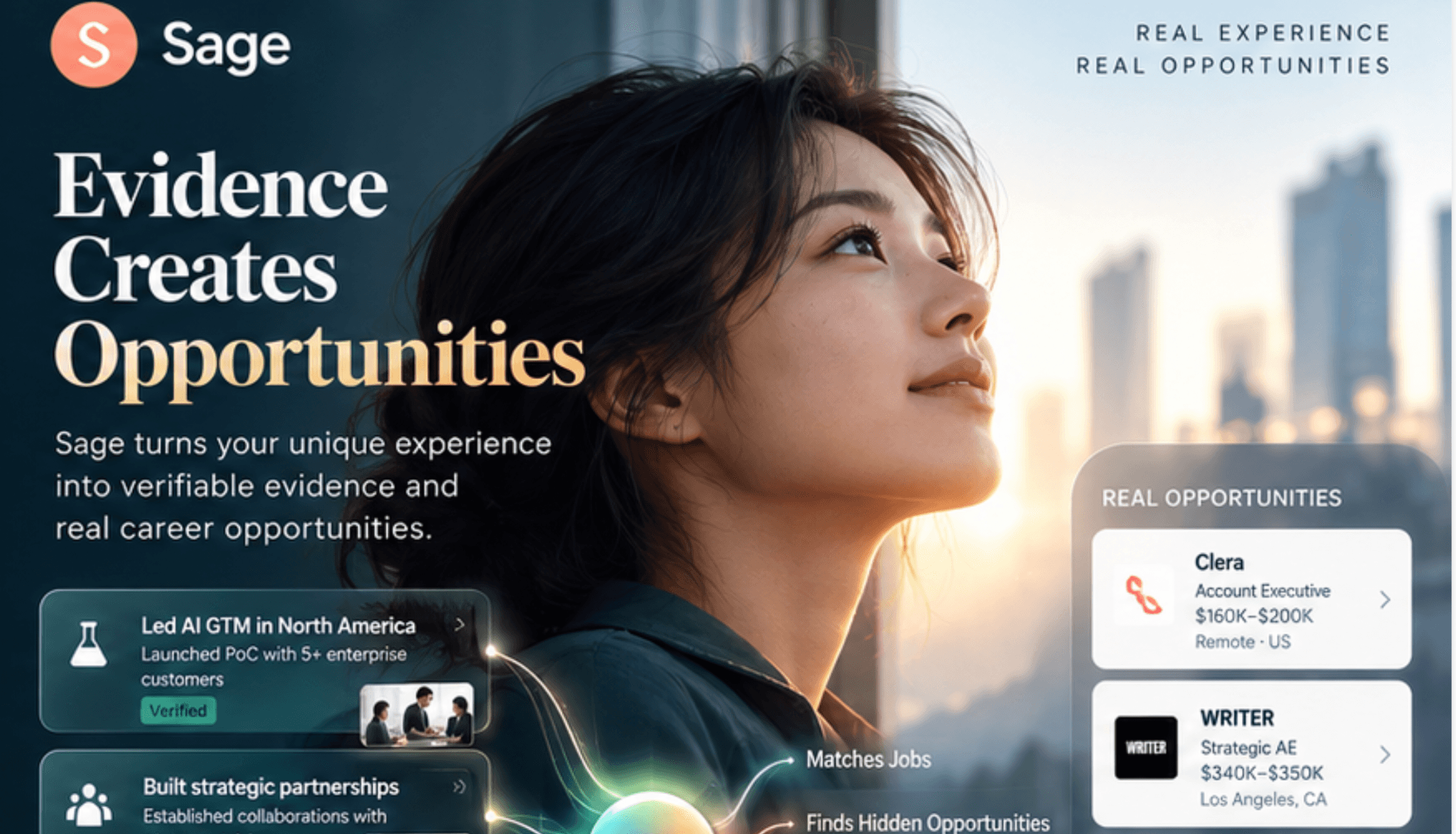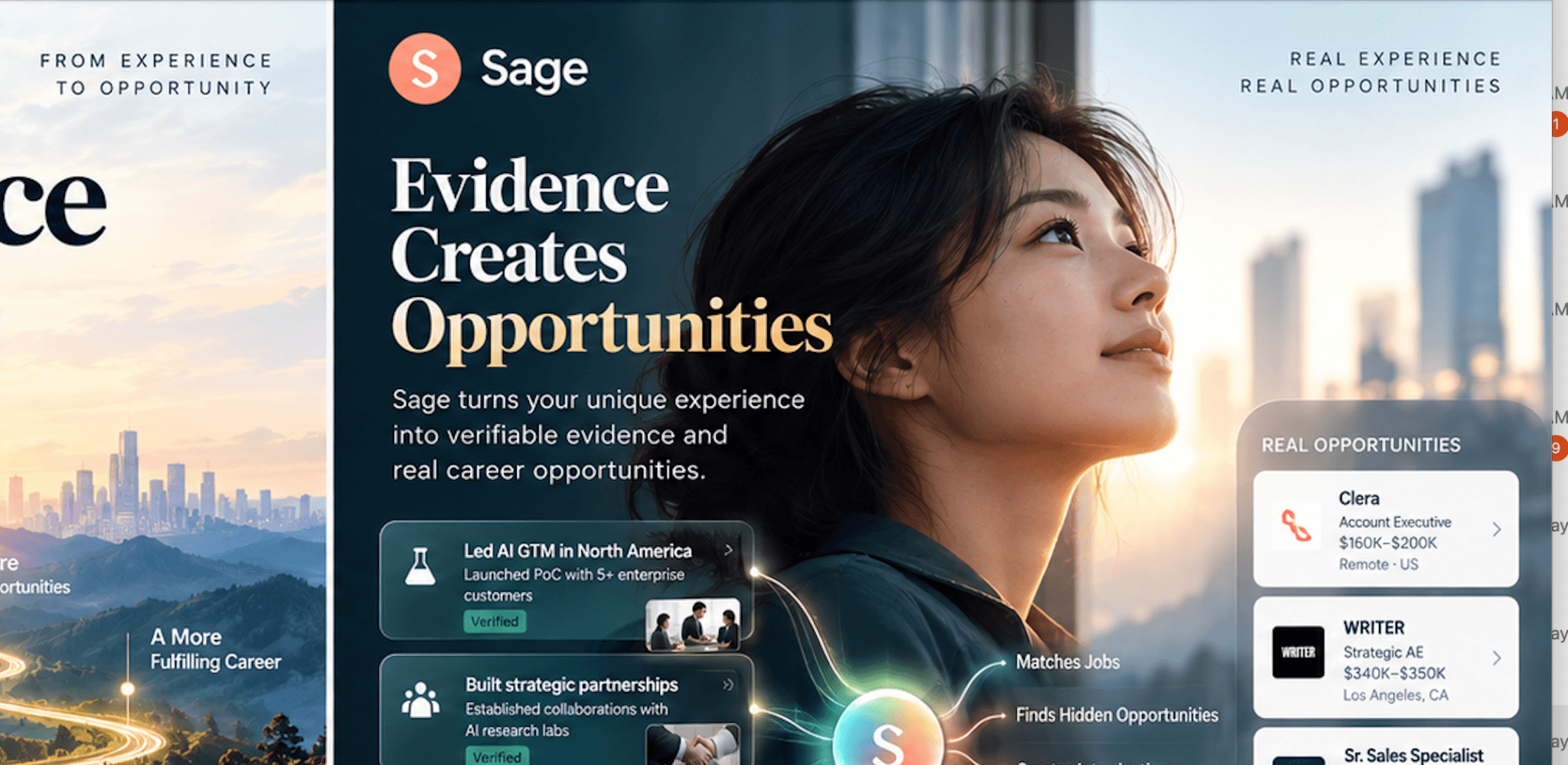
From TNC to Tapas to Saywise Different platforms, one question October 2026 · HJ The last section of Chang Kim’s (“CK”) angel investment page is called Former Companies. Companies that were acquired sit right next to companies that closed. Apollo, an audio fiction platform. Lifeguard Bio, a drug developer. Buildspace, an education company for on-chain developers. Next to each of these names, it simply says “Shut down.” An investment portfolio is usually a showcase of wins. There is no reason to keep failed investments on a public page. But CK kept them. It is a small detail. Yet it tells you more about the man than any exit price. For CK, a record is not a way to look bigger. It is a way to write down, accurately, what he tried and what happened. This essay follows that record: three companies, more than fifty investments, a year-long sabbatical, and Saywise. On the surface, these are different stories. Follow them long enough, and they lead to one question. How do we take the value that already lives inside people, but hasn’t yet been seen, and connect it to more people and bigger opportunities? 1. Three companies, one problem TNC (2006–2008). The company behind TextCube, a blogging tool. In the Web 2.0 era, it let ordinary people publish their own thoughts. Google acquired TNC in 2008; Google’s Korea blog described it as Google’s first acquisition of a Korean company. CK joined Blogger as a product manager and led its redesign and Google+ integration. Tapas (2012–2023). A mobile storytelling platform for webcomics and web novels. It helped creators find readers, build fan communities, and turn their stories into income and original IP. In 2021, Kakao Entertainment acquired Tapas for about $510 million. Saywise (2024–). A company that uses AI to bring out the experience and wisdom inside people and connect it to better career opportunities. It is building Sage, an AI recruiter that works with you by text, 24 hours a day. Only the subject changed. From a person’s writing, to a person’s stories, to a person’s career and wisdom. Each time, CK built a way to connect one person’s voice to a bigger market. That part of the story is fairly well known. Less known is the path CK walked as an investor over the same years. 2. 2008: Two beginnings CK made his first angel investment in 2008, the same year Google acquired TNC. His first exit and his first investment came in the same year. Just as he closed one chapter as a founder, he started helping other founders. For the next eighteen years, those two paths never stopped. He kept investing while he was a product manager at Google, while he ran Tapas for eleven years, during his sabbatical, and now, while building Saywise. From 2023 to 2024, he was also a General Partner at Rabbit VC. Looking back on his sabbatical, he wrote that managing more than fifty investments, including a new fund where he served as GP, was not a source of stress. It was “something that gave me energy.” Founding a company means solving one problem directly and deeply. Investing means standing beside many founders as they solve similar problems in their own ways. CK has done both at the same time. 3. A portfolio is a map of what you care about CK’s investment page has five sections: US companies, Korean companies, syndicate investments, fund LP commitments, and Former Companies. At first glance, the range is wide: Web3 games, prescription delivery, craft beer, hearing aids, construction logistics. But step back, and a few themes keep coming back. First: stories and IP. Story Protocol, a Web3 storytelling and IP protocol. Jubilee Media, a media company focused on empathy. Venn, a community for transmedia IP creators. Concept Art House, which builds game IP assets. Long Black, a long-form knowledge media company in Korea. Dankoom-I, an edutainment IP company. The “economy of stories” CK worked on at Tapas shows up in his investments too. Second: work, knowledge, and careers. Liftoff, a social recruiting platform. Question Base, AI-assisted workplace Q&A. Dex, a personal CRM. Wonder, a research platform. Aha, a Korean Q&A service. Alicon (집무실), a distributed office company. Patlytics, AI-powered patent search. And, in the Former Companies section, Sugarwork: a tool that used AI to capture the knowledge inside an organization’s people. It was acquired by Decidr. This group is especially interesting for understanding Saywise. One company tried to make hiring more human and relationship-driven (Liftoff). Another tried to use AI to draw out the knowledge inside people (Sugarwork). Long before he started Saywise, CK was watching both questions play out through other founders’ companies. It would be too much to call this a master plan. But it is clear that Saywise did not come out of nowhere. Third: tools that help individuals become economic players. Tomo Credit, a credit card that doesn’t require a credit score. Ceeya, a website builder for solo business owners. Trend.io, which connects brands with influencers. These are services that open doors for people the existing system often overlooks. Fourth: a bridge between Korea and the US. CK has invested directly in eleven Korean companies and committed as an LP to Korean funds such as Strong Ventures, Future Play, Fast Ventures, Antler Korea, and Sazze Partners. In Los Angeles, he backed Sopo, a Korean fast-casual restaurant, and Dokkabier, an Asian-flavored craft brewery. Since 2026, he has also volunteered as Chief Strategy Officer of United Korean Founders (UKF), a community for Korean and Korean American founders. Put these four themes together, and you see that CK the founder and CK the investor have been chasing the same question: connecting people, stories, and knowledge that haven’t been fully seen to a wider market. 4. Investing in an ecosystem, not just companies Another thing that stands out is the length of his fund list. CK is an LP in sixteen funds. A direct investment means picking one company. An LP investment means supporting another investor’s judgment and network. His steady commitment to early-stage Korean investors and smaller funds suggests he cares less about individual bets and more about making the whole startup ecosystem stronger. In an interview with Deftly VC, CK described his investing as “paying it forward”: giving back to the next generation of founders the help and lessons he received early on. In the same interview, he openly shared that for Tapas’s first two years, he couldn’t find a working business model and faced serious cash pressure, until he studied how mobile games make money and changed direction. Because he has lived through that kind of uncertainty, he knows founders need more than money. They need experience, connections, and someone who asks first: “Is there anything I can help with?” 5. A portfolio that doesn’t erase failure Let’s go back to Former Companies. In that list, very different endings are written in the same plain format. Lounge was acquired by Pulse. Aerial was acquired by Typeface.ai. Sugarwork was acquired by Decidr. Apollo, Lifeguard Bio, and Buildspace shut down. Recording good outcomes and disappointing ones with the same weight. That attitude lines up exactly with the principle Saywise needs to hold onto. When AI can produce a polished résumé for anyone in seconds, documents are no longer rare. What is rare is evidence that can be verified. And trust in evidence doesn’t come from showing only your best results. It comes from recording results as they really are. The way CK the investor treats his own portfolio could become the principle behind the product CK the founder is building. 6. The sabbatical: “If I only had five years left” In January 2023, CK left his company. In nearly twenty-five years of work, he had never taken more than two weeks off. He decided to rest for at least a year. During that year, he traveled to about twenty cities around the world, welcomed his third child, and read roughly one book a week. He wrote more than 200 pages of journal entries in Google Docs, caught up with old friends, and met new people. He also wrote, calmly and honestly, about the things he wanted to do but didn’t, like taking an unusual trip alone. His methods were ikigai and a “whole-life review.” And one question brought him more clarity than anything else: “If I only had five years left to live, what would I do?” The answer was not to prove himself with another, bigger company. The answer he found was “a platform that helps people share their work experience and wisdom better.” A mission-driven business. That was the starting point of Saywise. In his sabbatical notes, he shares three questions that can open a meaningful conversation with anyone: “How have you been lately?” “What are you spending most of your time on these days?” “Is there anything I can help you with?” The third question stays with you. It is probably the question CK has been asking other founders for eighteen years. And in a way, Sage is an attempt to ask that question to everyone, 24 hours a day, as a system. 7. Saywise today: a great recruiter for everyone Today, Sage is an AI recruiter that works with you by text. It learns your experience and preferences, tells you when a matching job is posted, tailors your résumé to each role, and can even apply for you. Hiring manager research, scheduling, and interview coaching are listed as coming next. CK spent many years on the hiring side of the table. Again and again, he saw strong candidates miss opportunities, not because they lacked skill, but because they saw the posting too late or didn’t have time to prepare. That is where his core belief comes from: “Job searching is a full-time job, except you don’t get paid.” Having a great recruiter on your side has always been a privilege for the few. Saywise wants to turn that privilege into basic career infrastructure that everyone can use. 8. Saywise’s next ten years, through an investor’s eyes This section is not Saywise’s public roadmap. It is my own proposal, based on the record above. If CK the investor looked at a company like Saywise, what would he ask? Probably this: “When models get better and competitors ship the same features, what is left?” Résumé writing, job matching, and auto-apply are quickly becoming standard features. As foundation models improve, the differences between products shrink. So the asset Saywise needs to build is not a feature. It is each person’s unique evidence of experience, the context behind their choices, and the memory of what actually happened after each opportunity. That is why Sage’s next step should not be “Resume AI.” It should be Career Evidence Infrastructure, which could be built in five layers: Career Intake. With the user’s clear permission, take in résumés, work samples, results, and feedback. Evidence Graph. Remember a career not as keywords, but as connections between roles, actions, decisions, results, contributions, and proof. Opportunity Intelligence. Look beyond job titles and years of experience. Is the evidence strong enough? Is there a relationship that can open the door? Does the role fit the direction this person wants? Career Orchestration. Run the whole flow: search, filling evidence gaps, writing applications, networking, interviews, and negotiation. Sage does the work. The user makes the call. Outcome Memory. Remember which applications got replies, which evidence persuaded people, and what happened after the hire, so the next decision is better. At that point, Sage is no longer a tool you open only when you’re job hunting. It helps you through your first 90 days in a new role, records your wins each quarter, prepares the evidence for salary and promotion talks, and scouts your next move before you need it. It becomes a lifelong Career Management Agent. Two principles in this picture must never change. One: the individual owns the data. Career data is not an asset of Saywise or of employers. It belongs to the user, and the user controls it. Two: no inflation. Every important claim Sage writes should be clearly marked as “documented fact,” “confirmed by the user,” “AI inference,” or “needs verification.” Like a portfolio that keeps its failures on the page, Sage’s job is to show who you really are, as persuasively as possible. The way we measure success also has to change. Not how many jobs were recommended or how many résumés were generated, but how many times a person’s career actually moved forward. The moment a new achievement is verified. The moment an important relationship is formed. The moment an interview is booked. The moment a skill gap is closed. The moment an offer, a promotion, or a raise comes through. We could call these Monthly Career Progress Events. 9. The same question, a bigger answer At TNC, CK helped one person’s thoughts reach the world. At Tapas, he helped creators’ stories meet readers and markets. Through eighteen years of investing, he stood beside other founders so their potential could go further. And at Saywise, he is trying to help one person’s career and potential lead to better opportunities. From voice to story, from story to wisdom, from wisdom to evidence, from evidence to opportunity. People say you can tell what someone believes by looking at their portfolio. CK’s portfolio says something clear. He has kept betting on people, stories, and knowledge that the existing system hasn’t fully recognized. And whether the results were good or disappointing, he has recorded them honestly. CK’s next ten years may not be about proving himself with a bigger company. They may be about making the advice, networks, and recruiter support that only a few people have had into something many more people simply have. So the question Saywise must answer in the end won’t be “How many people used Sage?” How far did Sage actually move someone’s career forward? The fullest answer to the question CK has carried for nearly twenty years will be proven, in the end, by that number. Sources CK (Chang Kim) Bio and Angel Investments pages ( , as of October 22, 2026) Chang Kim, LinkedIn profile (October 2026) CK, My Sabbatical (「나의 안식년」, May 2024) Google Korea Blog, “Google and Tatter and Company Become One Family” (September 12, 2008) Kakao Entertainment Newsroom, Tapas acquisition announcement (May 2021) Deftly VC, “Deftly VC Welcomes LP Chang Kim” (March 2023) Saywise official website and CK’s Sage launch post (October 2026) HJ, “What Harvey’s Business Model Shift Asks of Saywise and Sage” (Saywise, October 2026) Hashtags Core (for Saywise / LinkedIn) #Saywise #Sage #ChangKim #FounderJourney #AngelInvesting #CareerEvidence #FutureOfWork #AIRecruiter Extended #Tapas #StartupEcosystem #KoreanFounders #PayItForward #CareerInfrastructure #AIAgents #Sabbatical #EvidenceBuilder